Updated 2026-09-11
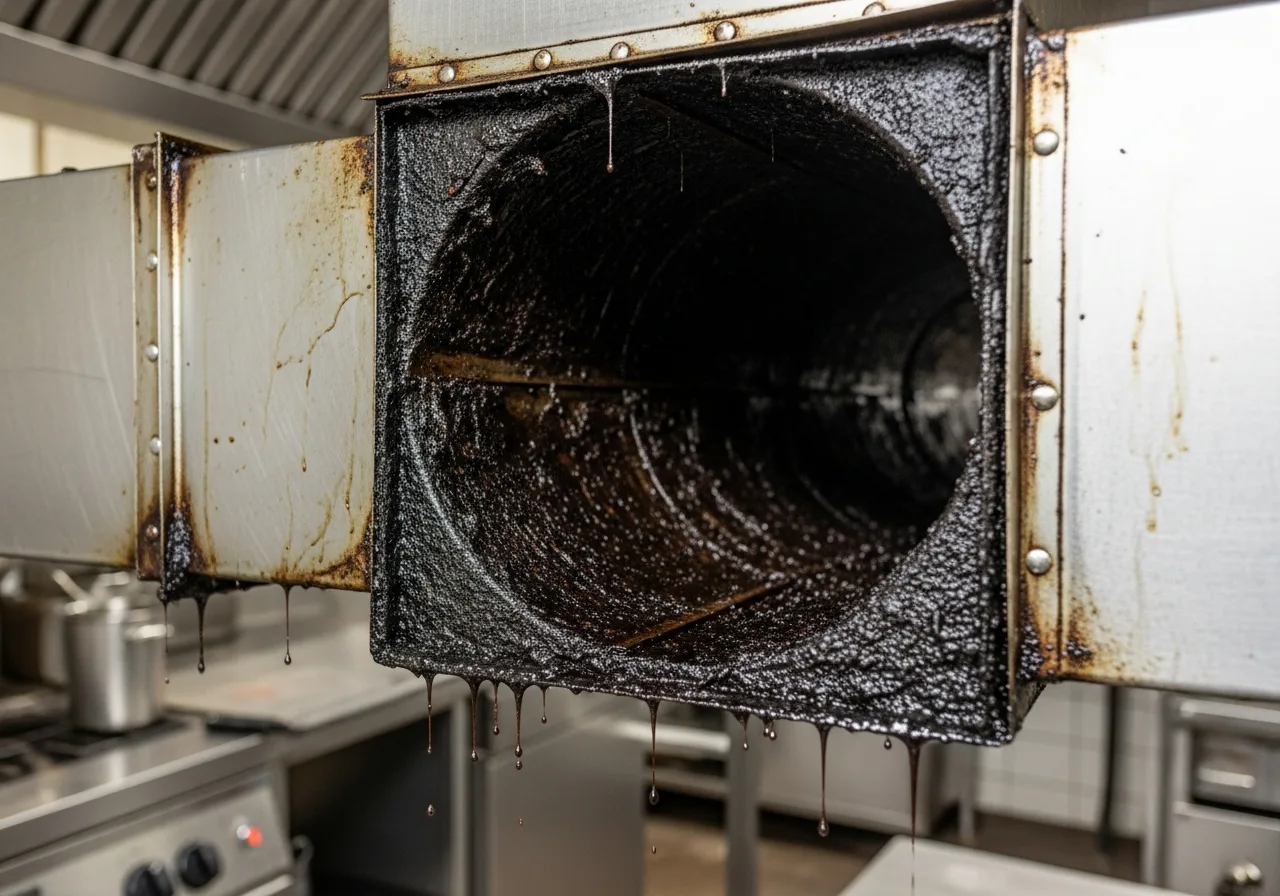
For most food businesses, the strongest reason to keep the extract system cleaned on schedule is not the fire service or the environmental health officer; it is the insurer. Commercial kitchen policies almost always contain a condition or warranty about extract cleaning, and it is the first thing a loss adjuster checks after a fire. This guide explains what the condition usually says, how it is tested and what evidence keeps a claim intact.
What the policy condition usually says
Wording varies between insurers, but the substance is consistent. The policy will require that the kitchen extract system, including canopies, filters, ductwork and fans, is cleaned at stated intervals by a specialist contractor, "in accordance with TR19" or "to a recognised standard", and that records of the cleaning are kept and available for inspection. Some policies set their own intervals; many simply adopt the TR19 Grease bands of three months for heavy use at twelve to sixteen cooking hours a day, six months for moderate use and twelve months for light use. Solid-fuel cooking often attracts a quarterly requirement whatever the hours. Some policies add conditions on filter cleaning by staff and on fire suppression over the range.
Condition, warranty or precedent
The legal label matters. A condition precedent to liability means the insurer need not pay a related claim unless the condition was met. A warranty under the Insurance Act 2015 suspends cover while it is breached and restores it once the breach is remedied; the Act also stops an insurer relying on a breach that could not have increased the risk of the loss that occurred. That protection is real for unrelated losses, but it offers nothing after a duct fire, because an uncleaned extract is exactly the risk the condition exists to control. Whatever the label, the outcome for a kitchen with no records is the same.
What the loss adjuster asks for
| Request | What satisfies it | What does not |
|---|---|---|
| Evidence of the last clean | The TR19 certificate and post-clean report, dated within the interval | An invoice saying "canopy clean", a verbal assurance |
| Proof the whole system was cleaned | Readings and photographs for the canopy, plenum, each duct section, fan and discharge | Photographs of the hood only |
| The cleaning history | A run of certificates at the correct interval for the usage band | One certificate from three years ago |
| Competence of the contractor | A specialist ventilation hygiene company with insurance and, ideally, Vent Hygiene Register listing | A general cleaner or a member of staff |
| Housekeeping between cleans | A filter cleaning log or checklist | Nothing written down |
The adjuster is not looking for a reason to refuse; they are establishing whether the condition was met. If the documents are in order, the extract cleaning question is closed in a day. If they are not, the claim is commonly reduced or refused, and the argument that follows can take months while the business is closed.
RC44 and the insurers' own guidance
The insurance industry has published its own view of catering extract risk: RC44, Recommendations for fire risk assessment of catering extract ventilation, from the Fire Protection Association through RISCAuthority. It describes how grease deposits form, sets out a five-stage risk assessment, and recommends weekly cleaning of canopies and filters alongside specialist cleaning of ducts and fans at a frequency set by the risk assessment. Insurance surveyors use it, and a kitchen that can show a fire risk assessment addressing the extract, plus the TR19 records, is speaking the surveyor's language.
What to keep, and where
- Every TR19 certificate and report, kept for the life of the policy and beyond, because a claim can be examined years later.
- The contractor's invoices, which corroborate the dates.
- Your fire risk assessment, showing the extract as an identified risk with the cleaning schedule as the control.
- A filter and canopy cleaning log completed by staff.
- Records of any fire suppression servicing.
Keep copies off site or in the cloud. The paper file in the office is often destroyed in the same fire.
Renewal, disclosure and change of use
The duty of fair presentation under the Insurance Act 2015 means you must tell the insurer what a prudent underwriter would want to know. If your kitchen has moved from a light-use cafe to a busy grill, if you have introduced charcoal or solid fuel, or if the extract has never been cleaned, those are material facts. Telling the insurer may raise the premium; not telling them can void the policy. When a new tenant takes over premises, the previous occupier's certificates are worth asking for, and a new inspection report sets a clean baseline.
Landlords, tenants and shared systems
Where the extract serves several units or runs through a landlord's riser, the lease normally decides who cleans and who insures. The landlord's buildings insurer and the tenant's contents and business interruption insurer may both have cleaning conditions, and both will ask for the records. The legal requirements guide covers the lease question.
Staying inside the condition
We arrange TR19 kitchen extract cleaning through vetted contractors who issue the certificate and photo report on completion, and we remind you before each interval ends so the record never has a gap. If your renewal is coming up, or your broker has asked for evidence, send us the details of the kitchen and we will get a quote to you promptly.
Read next: Legal Requirements · Post-Clean Report · EHO Inspections
Frequently asked questions
My policy says "cleaned to a recognised standard". Is TR19 enough?
Yes. TR19 Grease is the standard most UK insurers have in mind when they use that phrase, and a report carried out to it, with readings and photographs, will satisfy the condition. If the policy names a different standard or sets its own interval, follow the stricter requirement, and if anything is unclear ask your broker to confirm in writing what the insurer expects.
Will the insurer really refuse a claim over a missing certificate?
Commonly, yes, where the fire started in or spread through the extract and the cleaning condition was not met. Some insurers reduce the settlement rather than refuse outright; others decline it entirely. The cost of the clean is a small fraction of a kitchen fire claim, which is why the condition exists and why adjusters ask for the records first.
Does the insurer need the report every time, or just after a fire?
Normally only on request, which in practice means after a claim, at a survey or at renewal if the broker asks. You are not usually required to send certificates in automatically. You are required to have them, at the correct interval, when asked, and the gap between the two is where businesses get caught.
Can staff cleaning the canopy count towards the condition?
Staff cleaning of filters and visible canopy surfaces is expected as routine housekeeping and is worth logging, but it does not meet a condition that requires the system to be cleaned by a specialist contractor to TR19. The ductwork and fan need the specialist, with measured readings and a report, at the interval for your usage band.