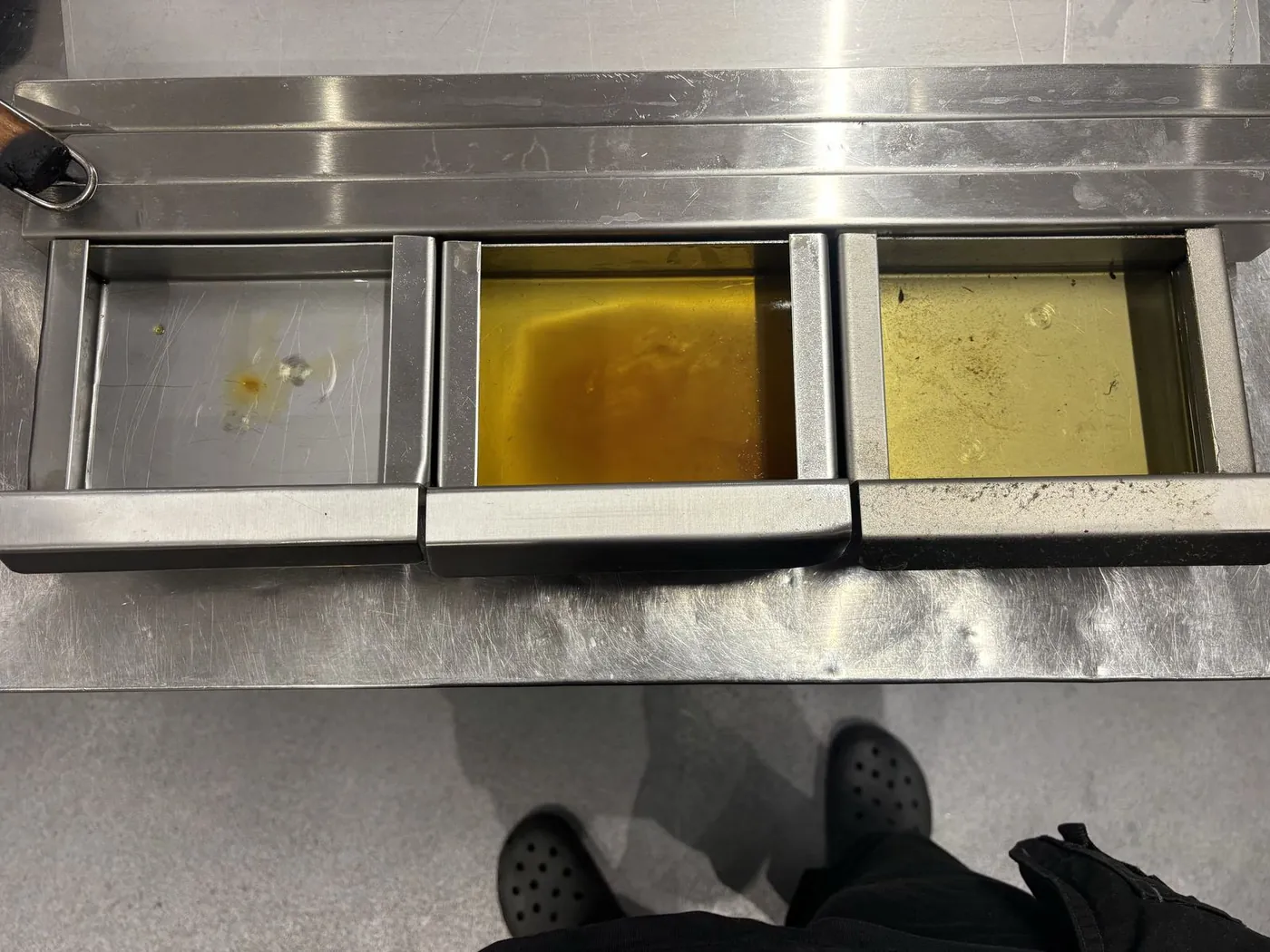
Grease filters sit in the canopy between the cooking line and the plenum, and their job is to catch as much airborne grease as possible before it enters the ductwork. When they are clean and correctly fitted, they take a large share of the load off the duct and fan. When they are blocked, missing or the wrong type, grease either bypasses them through the gaps or is pushed through with the airflow, and the duct fills faster than the cleaning schedule allows for. Filter care is the cheapest part of extract hygiene and the most neglected.
Filter types and how they behave
| Filter type | How it works | Cleaning approach | Replace when |
|---|---|---|---|
| Baffle filter (stainless steel or aluminium) | Forces air through a series of bends; grease is flung onto the baffles and drains to the tray | Soak tank, dishwasher or pressure wash; robust enough for daily cleaning | Buckled, corroded or no longer seating flush in the frame |
| Mesh filter (expanded aluminium) | Traps grease in layers of mesh | Soak and rinse; clogs quickly and holds grease within the mesh | Mesh cannot be cleared, or the kitchen moves to heavy use; many insurers prefer baffles |
| Cartridge or extractor filter | Cyclonic or labyrinth designs in modern canopies | As the manufacturer specifies; usually washable | Damaged seals or housing |
Mesh filters deserve a particular note. Because they hold the grease they catch within the mesh, a loaded mesh filter is itself a fire risk directly above the range, and it restricts airflow badly as it fills. TR19 Grease and most insurers favour baffle filters for commercial cooking, and switching is one of the simplest improvements a kitchen can make.
What we can arrange
- Filter cleaning as part of every canopy or full system clean, with the filters removed, degreased and refitted, and the housing and grease trays cleaned behind them.
- Filter exchange, where a contractor swaps your filters for a clean set on a weekly or fortnightly cycle and takes the dirty ones away. Useful for kitchens without a soak tank or the staff hours to clean them properly.
- Replacement of damaged, missing or mismatched filters, including sizing for older canopies where the original frames are no longer made.
- Conversion from mesh to baffle where the canopy allows, along with a check that the filters sit flush with no bypass gaps.
In-house cleaning still matters
None of the above replaces the daily routine. Under heavy use, baffle filters should be washed every day; under moderate use, at least weekly. A dishwasher on a hot cycle, a soak tank with a suitable degreaser or a pressure washer outside all work. Fit them back the right way up, with the baffles vertical so grease drains to the tray. Environmental health officers check filters on hygiene visits because a filter caked in grease is visible evidence that the close-down routine is not being followed, and it is a routine finding in inspection reports.
Filters and the TR19 record
A full extract clean measured against TR19 Grease records the condition of the filters alongside the canopy, plenum, duct and fan, and the photographs of the filter housing before and after form part of the certificate. Missing or damaged filters will be noted, and an insurer or loss adjuster reading the report after a fire will see it. The contractors we work with are BESA-qualified, CHAS-accredited and fully insured, and every full clean they carry out ends with the TR19 certificate and photographic report. The frequency guide sets out the three-, six- and twelve-month system intervals for heavy, moderate and light use; filters are cleaned far more often than that, and exchanged or replaced as they wear.
Arranging filter work
Filter cleaning and replacement is usually arranged as part of canopy cleaning or a full extract clean, but a stand-alone exchange schedule or a replacement set can be quoted on its own. Tell us the canopy make and dimensions if you know them, how many filters it holds and how many hours a day you cook. A takeaway frying all day and a care home cooking three meals have very different needs. Ask for a quote and we will find a contractor who covers your area.
Related services: Kitchen Extract Cleaning · Canopy Cleaning · Ductwork Cleaning · Extractor Fan Cleaning
Frequently asked questions
How often should baffle filters be cleaned?
Daily in a heavy-use kitchen, and at least weekly in a moderate-use one. The test is simple: if grease is visible on the face of the baffles, they have gone too long. Daily cleaning keeps them light, keeps airflow up and keeps grease out of the duct, and it takes a few minutes in a dishwasher or soak tank at the end of service.
Can I run the canopy without filters while they are being cleaned?
No. Cooking with the filters out sends unfiltered grease straight into the plenum and duct, and in many canopies it also exposes the fire suppression nozzles and the duct opening. Keep a second set so that one is in the canopy while the other is being cleaned, or use an exchange service that swaps them on a cycle.
Are mesh filters banned?
Not banned, but discouraged. TR19 Grease notes that mesh filters retain the grease they capture and are less effective than baffles in commercial cooking, and some insurers ask for baffle filters as a policy condition. If your canopy has mesh filters, a conversion to baffles is usually straightforward and the contractor can size and fit them during a clean.
Do you sell replacement filters?
We do not sell anything ourselves. The contractor we assign will measure your canopy, source baffle filters to fit, and supply and install them as part of the visit, with the cost shown on their quote. Prices depend on the filter size, material and quantity, and stainless steel costs more than aluminium but lasts considerably longer under daily washing.