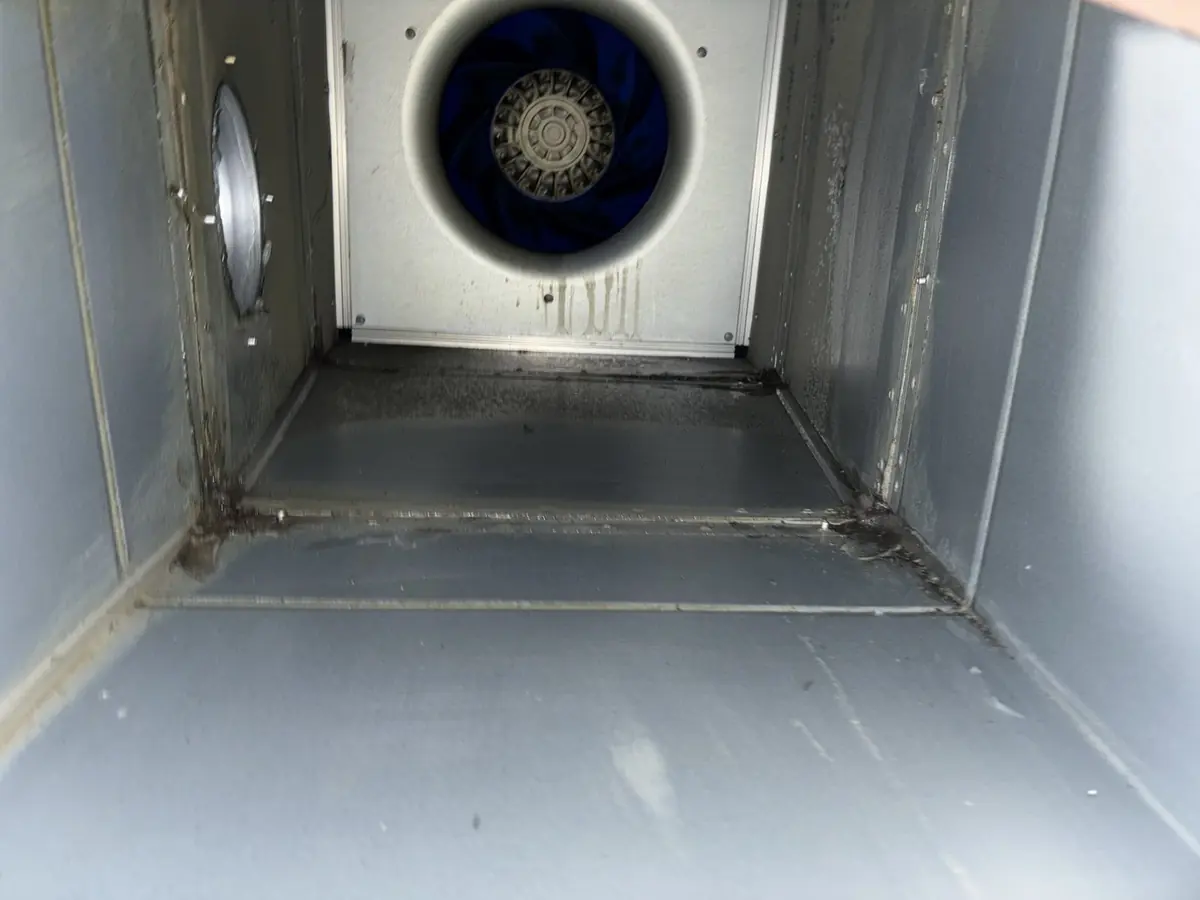
The extract fan does the work of pulling smoke, steam and grease vapour out of the kitchen, and it pays for it. Grease that has stayed airborne through the canopy and along the duct hits the impeller at speed and sticks. Over a few months the blades carry a thick, uneven coating that throws the fan out of balance, strains the bearings and, because the motor is warm and the deposit is fuel, creates the single most likely ignition point in the whole system. Fan cleaning is the element of a TR19 Grease clean that addresses it.
Types of fan and where they sit
Commercial kitchens use several arrangements. Axial and centrifugal fans are common in smaller premises; inline box fans are mounted along the duct run in a ceiling void; larger kitchens often have a roof-mounted unit or a bifurcated fan, where the motor sits outside the airstream to keep it away from the grease. Each needs a slightly different approach, but all of them need to be reached, isolated and taken apart far enough to clean the impeller properly. A fan on a flat roof three storeys up needs safe access arrangements, and the contractor we assign will plan for that at the survey.
What the clean involves
- Electrical isolation of the fan and confirmation that it cannot restart during the work.
- Removal of the impeller where the design allows, or cleaning in place through the housing access.
- Degreasing of the blades, hub, scroll or casing, inlet cone and any flexible connectors either side of the unit.
- Cleaning of the external motor casing, cooling vents and anti-vibration mounts; the motor itself is not opened.
- Cleaning of the discharge duct and cowl or louvre beyond the fan, so grease does not drip down the building.
- Reassembly, a check for free rotation and balance, and photographs before and after.
Where the ductwork on either side of the fan is also being cleaned, the fan is normally dealt with last, so that debris dislodged upstream does not land on a clean impeller.
Signs the fan needs attention
| What you notice | Likely cause |
|---|---|
| A new rumble or vibration through the ceiling | Impeller out of balance from uneven grease build-up |
| Smoke and steam hanging in the kitchen | Reduced airflow from coated blades and a restricted duct |
| Grease staining on the roof or wall around the outlet | Deposit on the discharge cowl being carried out and dripping |
| Fan tripping or running hot | Motor working harder against the extra weight and drag |
Any of these is worth reporting early. A fan that fails during service is an expensive emergency; a fan that ignites is a great deal worse, and the grease fire risk guide explains why the fan is where so many duct fires begin.
Frequency and paperwork
The fan is cleaned at the same interval as the rest of the system under TR19 Grease: every three months for a heavy-use kitchen cooking twelve hours or more a day, six months for moderate use, twelve for light. In a takeaway running a charcoal grill or a fryer bank all day, the fan can be the first component to fall outside the grease-thickness limit, so some operators book an extra fan-only clean between full visits. Every clean we arrange is documented with before-and-after photographs and readings; when it forms part of a full system clean, those sit inside the TR19 certificate. The specialist we assign will be BESA-qualified, CHAS-accredited and fully insured, and will leave you with the certificate and photo report at the end of a full clean. Loss adjusters look at the fan photographs first, because that is where the fire usually started.
Arranging a fan clean
Tell us where the fan is, whether it is accessible from inside the building or from the roof, and what the rest of the system looks like. We will match you with a local contractor who can quote for the fan alone or, more usually, for the fan within a full extract clean alongside the ductwork. Prices depend on access, fan type and condition, and the cost guide gives a sense of the ranges. Ask for a quote and we will arrange the visit.
Related services: Kitchen Extract Cleaning · Canopy Cleaning · Ductwork Cleaning · Filter Cleaning and Replacement
Frequently asked questions
Can the fan be cleaned without taking it apart?
Partially. The housing and the accessible faces of the blades can be reached through the inspection hatch, but grease collects on the back of the impeller and inside the scroll where a hatch does not reach. Where the fan design allows the impeller to come out, the contractor will remove it, because that is the only way to get the reading down to the acceptance level.
Do you also service or repair the fan motor?
No. The contractors we arrange clean the fan and check that it runs freely and true afterwards, but they are not electrical or mechanical maintenance engineers. If the clean reveals worn bearings, a failing belt or a motor drawing too much current, the report will say so and you can pass it to your ventilation maintenance company. Many operators time both visits together.
My fan is on the roof of a shared building. Who arranges access?
You do, with the landlord or managing agent, but the contractor will tell you exactly what is needed. Roof access usually means a key for a hatch or an external ladder, a permit from the building manager and sometimes an escort. Where the roof has no edge protection, the contractor brings the safety equipment and the risk assessment as part of the job.
How often should a takeaway fan be cleaned?
If the kitchen cooks for twelve hours or more a day, the whole system including the fan is heavy use under TR19 and due every three months. Charcoal, tandoor and wok cooking load the impeller faster than gas fryers alone, and some takeaways find the fan needs an interim clean between full visits. The grease readings on each report will tell you whether that applies to yours.