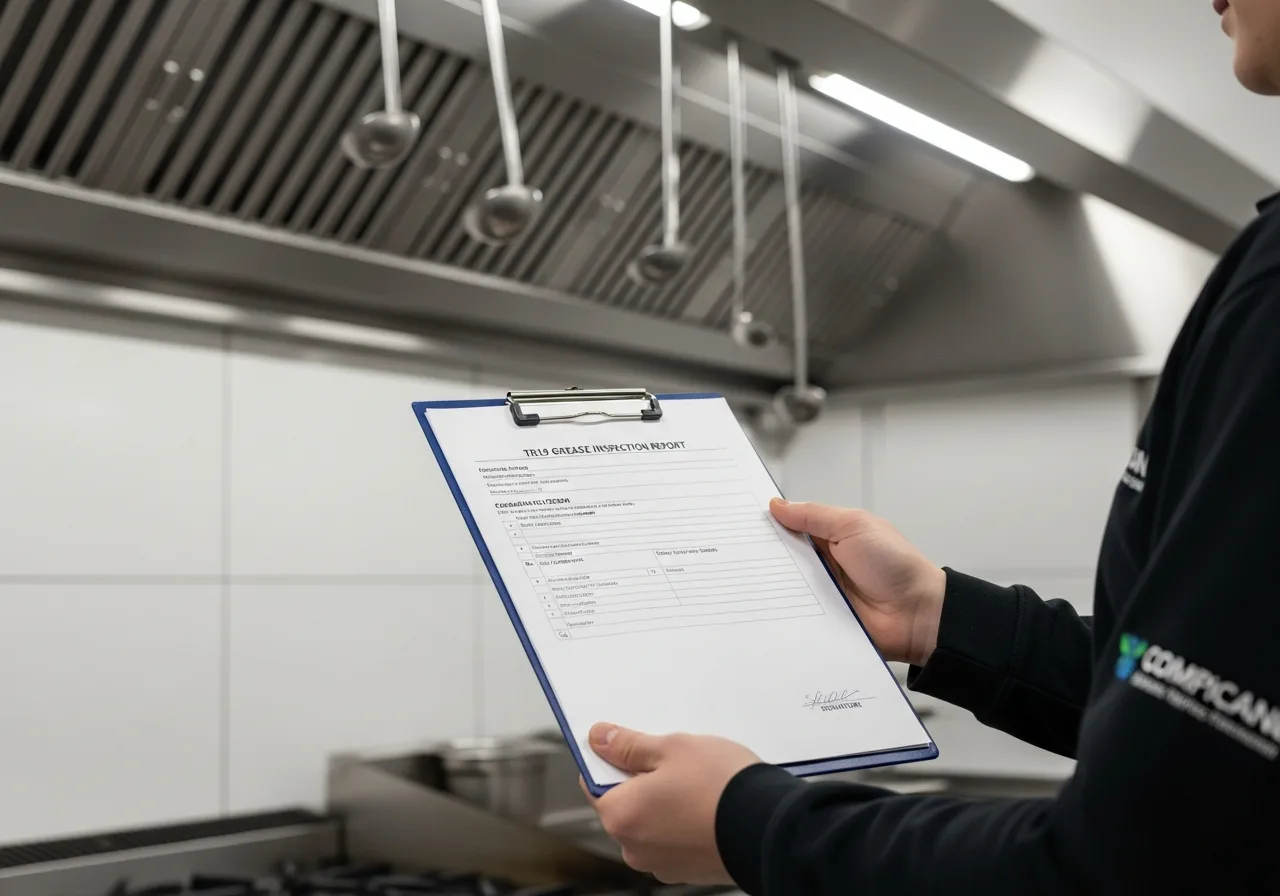
Not every enquiry we receive needs a clean straight away. Sometimes the question is simpler: what state is this extract system in, and what will it take to bring it into line? A TR19 inspection answers that. A specialist surveys the canopy, ductwork and fan, measures the grease deposit at set points, photographs what they find and writes it up in a report you can act on or hand to whoever asked for it. It is a diagnostic visit, not a cleaning visit, and it is priced accordingly.
When an inspection is the right call
- You are taking on a lease or buying a business and want to know whether the extract system is a liability before you sign.
- Your insurer, broker or a loss adjuster has asked for evidence of the system's condition and you have no recent certificate.
- An environmental health officer or a fire safety inspector has raised the extract during a visit and given you a deadline.
- A previous contractor's clean looks incomplete and you want an independent set of readings before paying for another.
- The system is complex, with long or hidden runs, and you want a proper survey so that a cleaning quote is accurate rather than a guess.
- There has been a small fire or a near miss and you need to establish what happened.
What the visit involves
The contractor we assign will trace the system from the canopy to the discharge point, opening the access panels that exist and noting where they are missing. At each accessible point they take a grease-depth reading using a Wet Film Thickness Test or Deposit Thickness Test, and photograph the surface. They classify the kitchen by usage, checking cooking hours against the TR19 bands of light (twelve-monthly), moderate (six-monthly) and heavy (three-monthly), and compare the readings to the thresholds. They will also note the fan type and condition, the state of the filters, and any obvious defects such as grease leaking from joints or a discharge too close to a window or a neighbour's air intake.
What the report contains
| Section | What it tells you |
|---|---|
| System schematic | Layout of canopy, duct run, fan and discharge, with existing and recommended access points |
| Grease readings | Depth at each test point against the 200 µm cleaning trigger and the post-clean target of around 50 µm |
| Photographs | Dated images of each accessible section, the filters and the fan |
| Usage classification | Light, moderate or heavy, with the resulting cleaning interval |
| Inaccessible sections | Where the surveyor could not reach and what is needed to get there |
| Recommendations | Whether a clean is required now, what access work is needed, and any defects to raise with your ventilation or fire-suppression contractor |
Inspection report or certificate?
The two are related but not the same, and it is worth understanding the difference before you ask for one. The TR19 certificate is issued after a clean and confirms that the system was brought within the grease-thickness limit on a given date. An inspection report records the condition of the system as found. If the readings are already within limits, the report is evidence that the system is compliant and no clean is needed yet, which is often what an insurer wanted to know. If they are above the trigger, the report tells you exactly what a clean must cover, and the same contractor can usually quote for it on the spot. What an inspection cannot do is certify a dirty system as clean.
Typical cost
An inspection-only visit typically costs between £150 and £350. The figure depends on the size of the system, the number of access points to open, how far the surveyor travels and whether the discharge is on a roof that needs safe access. Where a clean follows, some contractors offset part of the survey fee against it. See the certificate cost guide for how this compares with the cost of a full clean.
How we arrange it
Tell us why you need the inspection and who has asked for it, because a report for a loss adjuster is framed differently from one for a prospective tenant. We match you with a contractor who covers your area and is BESA-qualified, CHAS-accredited and fully insured; the same contractors carry out full cleans and issue the certificate and photo report on completion, so if the survey leads to a clean there is no second search. Whether the kitchen is a pub reopening after refurbishment or a hospital catering block, request an inspection quote and we will arrange it.
Related services: Kitchen Extract Cleaning · Canopy Cleaning · Ductwork Cleaning · Extractor Fan Cleaning
Frequently asked questions
Will an inspection satisfy my insurer?
If the readings show the system is within the TR19 grease-thickness limit, an independent inspection report with photographs is usually accepted as evidence of condition. If they show the system needs cleaning, the report will not satisfy the insurer on its own, but it demonstrates that you have identified the problem and gives you a clear specification for the clean that follows. Check the wording of your policy condition.
Can the inspection be done while the kitchen is trading?
Often, yes. Opening access panels and taking readings does not need the fan off for long, and a surveyor can usually work around a quiet period. The exception is the fan itself, which must be isolated to inspect the impeller safely, so most surveys are timed for a break in service or an early morning before cooking starts.
How quickly can I get the report?
Most contractors issue the written report within a few working days of the visit, and the surveyor will tell you the headline finding on the day. Where a deadline has been set by an EHO or an insurer, say so when you enquire and we will ask the contractor to turn the paperwork round faster so that you can meet it.
Is the inspection fee wasted if I then need a clean?
No. The survey produces the schematic, the access map and the readings that the clean is quoted and planned against, which makes the clean quicker and the quote more accurate. Some contractors offset part of the fee if you go ahead with them. If you already know the system is overdue, though, it is usually better to arrange the clean directly, since the report is included.