Updated 2026-09-11
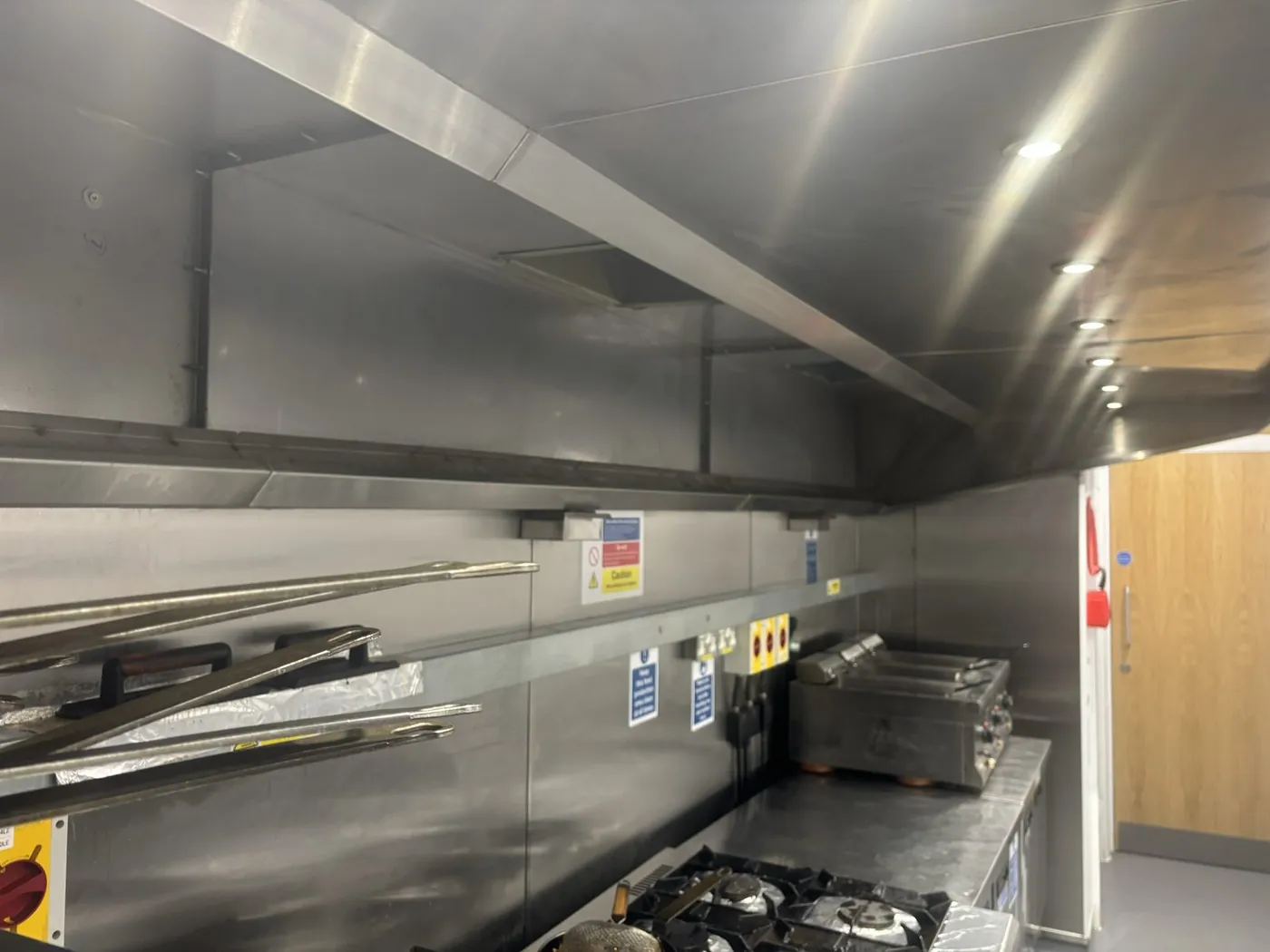
There is no national tariff for kitchen extract cleaning, and any page that gives you a single figure is guessing. The price is set by the size and condition of the system, how hard it is to reach and when the work has to happen. What we can do is give the ranges our partner contractors quote across the UK, explain what pushes a kitchen towards the top or bottom of each range, and set out what a proper quote must include so that you are comparing like with like.
Typical costs in 2026
| Type of system | Typical price range | What is usually included |
|---|---|---|
| Single canopy, short duct run, small kitchen (cafe, small takeaway, pub with a simple menu) | £300 to £600 | Canopy, filters, plenum, duct to discharge, fan, readings, photographs, certificate |
| Medium restaurant or pub with a longer duct run and one or two canopies | £500 to £900 | As above, with more access points and a longer visit |
| Large hotel, care home or multi-canopy site with long or vertical runs | £900 to £2,000 or more | Multiple systems, often over more than one night, one report per system |
| Inspection and TR19 report only, no clean | £150 to £350 | Survey, readings, photographs, condition report |
All figures are typical, exclusive of VAT, and depend on the system. A neglected first clean can exceed the range; a well-kept system on a contract may sit below it.
What decides the price
- Length and route of the ductwork. The single biggest factor. A canopy that discharges straight through the wall behind it is a short job; one whose duct runs the length of a building, up a riser and across a roof is not. The ductwork cleaning cost guide covers this in detail.
- Access. Every section has to be reached. If there are no access panels, the contractor will price to fit them, which raises the first invoice and lowers every later one.
- Condition. A system cleaned six months ago needs degreasing; one untouched for three years needs scraping first, and the hours roughly double.
- Number of canopies. Each hood, plenum and filter set is separate work, and a second canopy on the same run does not simply double the price, but it adds to it.
- The fan. A roof-mounted fan that needs a tower or powered access platform costs more to reach than an inline unit in a plant room.
- Timing. Most cleans happen overnight or on a closed day as standard; Sunday and bank holiday work may carry a premium.
- Location. Travel to a remote site is built into the price; city-centre parking and loading restrictions occasionally are too.
What a quote must include
Before accepting a quote, confirm in writing that it covers the whole system to the discharge point, includes grease-depth readings before and after, photographs at every access point, cleaning of the fan and impeller, disposal of the waste and a written TR19 certificate with a next-due date. A quote that excludes any of these is not a TR19 clean and cannot be compared with one that is. The commonest trick is a low headline price for the canopy and filters, with the ductwork described as "subject to survey" and never mentioned again.
Cheap quotes and what they usually leave out
A figure well below the ranges above nearly always means one of four things: the ductwork is not being cleaned, no measurements are being taken, the fan is excluded, or the contractor is not insured for the work. Each of them leaves you holding a document that will fail when a loss adjuster reads it. Insurers commonly reduce or refuse claims after a duct fire where the cleaning records do not show the whole system was dealt with; the saving on the clean is small beside that.
Budgeting for the year
Because the TR19 interval depends on cooking hours, so does the annual cost. A heavy-use kitchen cooking twelve to sixteen hours a day is cleaned every three months, so four visits a year; a moderate-use kitchen at six to twelve hours every six months, so two; a light-use kitchen at two to six hours every twelve months, so one. Multiply the per-visit range by the number of visits and you have a realistic budget line. Contractors generally price a scheduled contract below the equivalent one-off visits, and the reminders come built in.
Ways to keep the cost down without cutting corners
- Have access panels fitted once and properly; every later clean is quicker.
- Keep to the interval; regular degreasing is cheaper than periodic scraping.
- Wash the filters weekly so less grease reaches the duct.
- Combine sites or systems into one contract if you operate more than one kitchen.
- Offer flexible timing; a contractor who can fill a gap in the diary may price accordingly.
Getting an accurate figure
Extract Cleaning UK arranges quotes rather than issuing them. Tell us the postcode, the number of canopies, a rough idea of the duct route and your daily cooking hours, and a vetted local contractor will price the job, usually within a working day; most quotes are confirmed on a short survey before the clean. There is no fee for the introduction.
Read next: Ductwork Cleaning Cost · Insurance Requirements · Legal Requirements
Frequently asked questions
Why is my quote higher than the range on this page?
The ranges cover typical systems in reasonable condition. A quote above them usually reflects a very long or complex duct route, several new access panels, heavy deposits from years without cleaning, or fan access that needs specialist equipment. Ask the contractor to itemise the quote; a good one will explain exactly which of those factors applies and what the price would be next time.
Is it cheaper to have the canopy cleaned on its own?
It is cheaper, but it is not kitchen extract cleaning and it does not produce a TR19 certificate, because most of the grease and all of the fire risk sit in the ductwork and fan. Canopy cleaning has its place between full cleans for appearance and hygiene, but it should never be bought as a substitute for the full system clean the interval requires.
Do contractors charge for the survey?
Most will quote from a description and confirm on a short site survey without charge, particularly where the clean is then booked. A formal inspection with readings and a written report is a separate service, typically £150 to £350, and is worth paying for when you need to know the condition of a system before committing to a clean.
Can I spread the cost with a monthly contract?
Many contractors offer scheduled contracts with a fixed number of visits a year, sometimes invoiced per visit and sometimes as a monthly amount. Beyond spreading the cost, the contract locks the dates to the right TR19 interval and keeps the certificate continuous, which is what an insurer wants to see.