Updated 2026-09-11
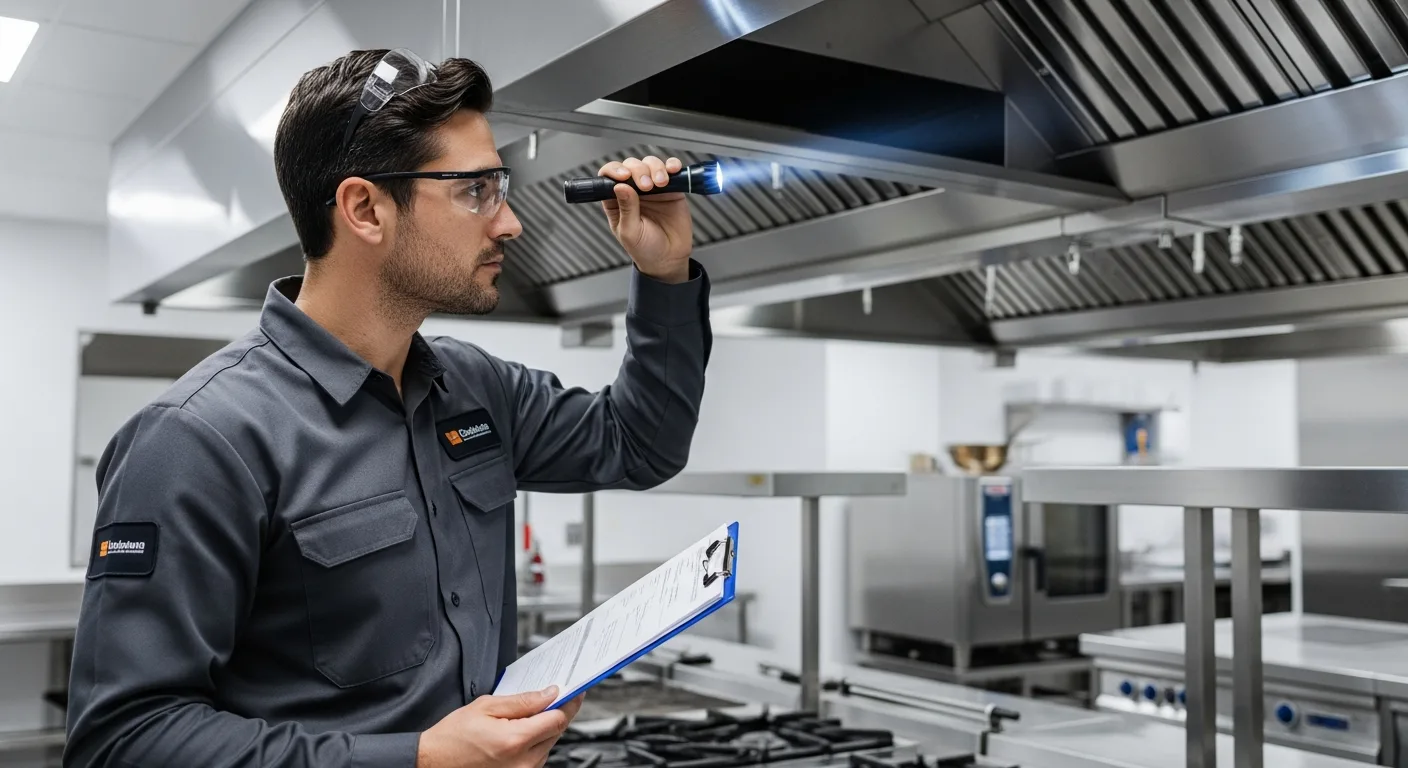
Kitchen extract cleaning is unregulated in the sense that anyone can offer it. The difference between a specialist and a general cleaner is invisible on the day, because both leave a shining canopy, and only becomes visible when a loss adjuster opens the report or a fire officer opens the duct. The questions below are the ones we use when vetting the contractors we arrange work through, and they are just as useful if you are appointing one directly.
Ten questions to ask
| Question | The answer you want |
|---|---|
| Are you on BESA's Vent Hygiene Register, or a member of BESA or NAADUK? | Yes, with a registration you can check. Registration is voluntary, but it is the clearest sign a company works to TR19 Grease and is audited on it. |
| Who will do the work and what qualifications do they hold? | Named technicians holding the BESA Grease Hygiene Technician qualification or equivalent, not subcontracted general cleaners. |
| What insurance do you carry? | Public liability and employers' liability certificates on request, at a level appropriate to working in a commercial building, with cover that extends to ventilation hygiene work at height. |
| Can I see a sample post-clean report? | A full report from a comparable kitchen with readings by section, paired photographs and a next-due date, not a one-page certificate. |
| How do you measure grease deposits? | Wet Film Thickness Test or Deposit Thickness Test at set points in each section, before and after, against the 200 µm trigger. |
| What will you do if the ductwork has no access panels? | Survey the route, price the panels, fit them and record every one on the schematic. Not "clean what we can reach". |
| Will the fan and discharge be included? | Yes, with the impeller and housing photographed before and after. |
| What happens to any section you cannot reach? | It is recorded in the report with the reason and a recommendation, never left out. |
| Can you work overnight or on our closed day? | Yes, as standard, with the kitchen returned to service before the next shift. |
| Can you give references from similar kitchens? | Named businesses in your sector who will confirm the report arrived and the system was cleaned end to end. |
Red flags
- A price without questions. A contractor who quotes without asking about duct length, access, cooking hours or the fan is guessing, and the guess will be resolved on the day by leaving things out.
- "TR19 certificate included" with no mention of measurement. The certificate follows from the readings; a firm that does not measure cannot certify.
- Photographs of the canopy only. The evidence has to cover the ductwork and fan, where the fire risk is.
- Reluctance to fit access panels. Usually a sign that the quote assumed the duct would not be cleaned.
- No insurance documents. If they cannot produce them before the job, they will not produce them after an accident.
- Pressure washing as the method. Ductwork is degreased by hand, with scrapers, chemical degreasers and rotary brushes where appropriate; high-pressure water in a horizontal duct pushes grease and water into the parts you cannot see.
- Twelve months on every certificate. The next-due date depends on usage: three months for heavy use, six for moderate, twelve for light. A contractor who writes a year on a takeaway's certificate has not read the specification.
- A price well below the market. Typical ranges are £300 to £600 for a small single-canopy kitchen, £500 to £900 for a medium restaurant with a duct run, and £900 to £2,000 or more for a large or multi-canopy site. Far below that, something is missing.
Method matters
Ask how the duct will be cleaned. A competent contractor removes filters and cleans them separately, degreases the canopy and plenum, opens each access panel and scrapes then degreases the section, uses rotary brushes or similar equipment where the geometry suits, strips and cleans the fan, and finishes at the discharge. Waste grease is collected and disposed of, not washed down the kitchen drain. The system is left dry and the fan proven before the technicians leave. Anyone describing a quicker method is describing a smaller job.
Contracts and reminders
Once you have a good contractor, a scheduled contract at the right interval is easier than remembering to rebook, and usually cheaper per visit. Make sure the contract states the interval, what each visit covers and that a full report follows every clean. Reminders should come from the contractor or the arranging service, not depend on a note in your diary.
Why the choice matters to your insurer
An insurer's cleaning condition usually requires a specialist contractor and records to a recognised standard. If a claim is examined and the contractor turns out to have been a general cleaner without measurement or full-system photographs, the claim is commonly reduced or refused even though a clean of sorts took place. The insurance requirements guide explains what the loss adjuster looks for; the post-clean report guide shows what the contractor's paperwork must contain.
How our vetting works
Extract Cleaning UK does not carry out cleaning, so the entire value of what we do rests on the contractors we choose. Before a company joins our network we check its registrations, insurance and sample reports, confirm it measures and photographs to TR19 Grease, and confirm it fits access panels rather than working around them. Our partner contractors are BESA-qualified, CHAS-accredited and fully insured, and every clean we arrange ends with the TR19 certificate and before-and-after photo report. If you would rather skip the ten questions, describe your kitchen to us and we will put a vetted specialist in front of you with a quote.
Read next: TR19 Certificate · TR19 Certificate Cost · TR19 Regulations
Frequently asked questions
Does a contractor have to be a member of BESA to issue a TR19 certificate?
No. Any competent ventilation hygiene contractor can clean and report to TR19 Grease, which is a published specification. Listing on BESA's Vent Hygiene Register means the company is audited against it and can issue a scheme certificate, which carries extra weight with insurers, but the substance of the report, the readings and the photographs, is what matters.
Can my regular cleaning company do the extract?
Only if they are set up for ventilation hygiene: trained technicians, deposit measurement, access panel fitting, fan work and a TR19-format report. Most contract cleaning firms are not, and a canopy wipe from them does not meet the insurance condition. Ask for a sample report before agreeing; if they cannot produce one, use a specialist for the extract.
How far in advance do I need to book?
For a routine clean, a week or two is usually enough, and overnight slots are the norm. First cleans of neglected systems, multi-kitchen sites and jobs needing roof access take more planning. If your certificate has already lapsed, tell the contractor; most will prioritise a kitchen that is outside its interval, and we can help find a slot quickly.
What should I do if the last contractor did a poor job?
Keep the report as evidence of what was and was not covered, and have the system inspected by a different specialist; a TR19 inspection with readings will show whether the ductwork and fan were actually cleaned. If they were not, raise it with the original contractor and, if the certificate misrepresented the work, tell your insurer so the record is corrected before it is relied on.