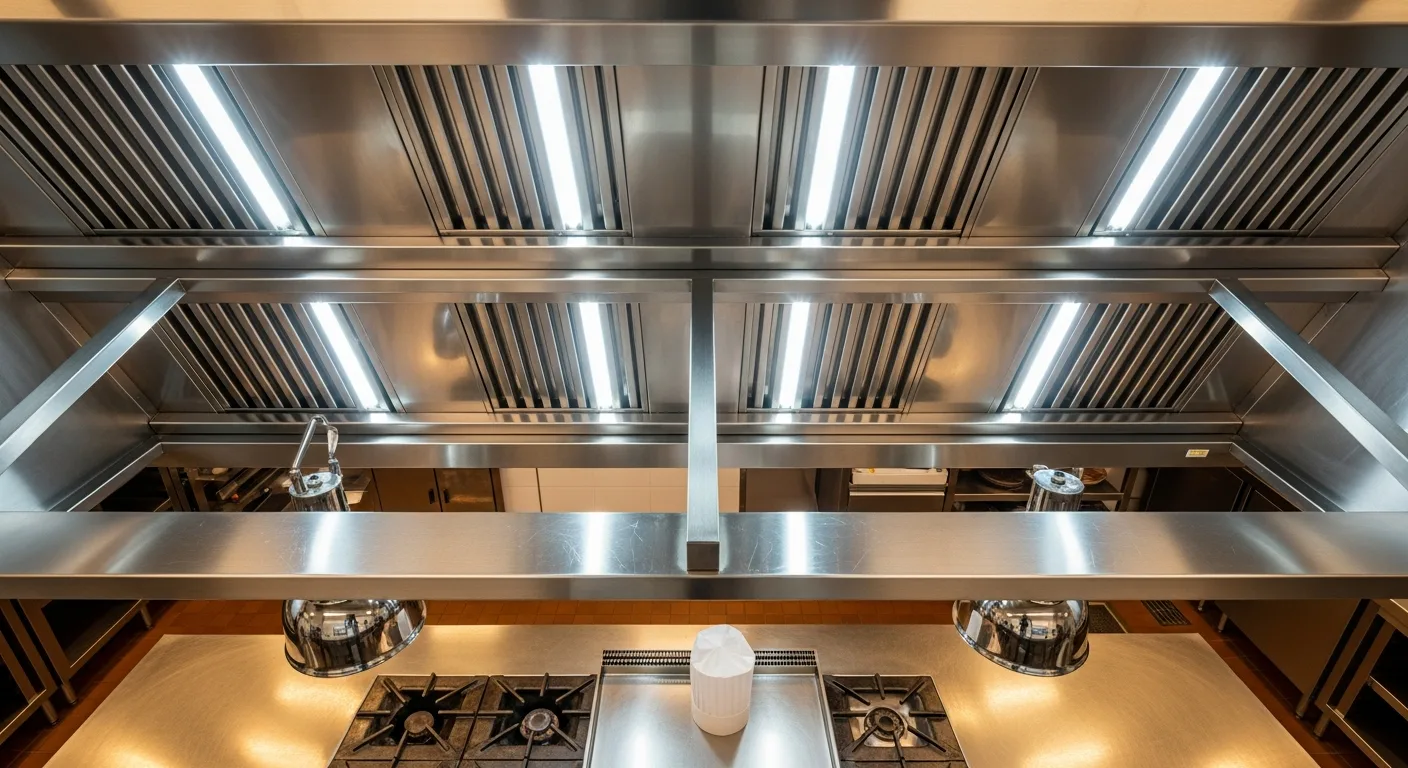
A care home kitchen works a steady, predictable day: breakfast from early morning, a cooked lunch, tea in the late afternoon and often a supper or snack service into the evening. That pattern usually adds up to between six and twelve cooking hours, which places most homes in the moderate-use band of TR19 Grease and on a six-month cleaning interval. A large nursing home with a 24-hour kitchen, or one that also caters for a day centre, can tip into heavy use at three months; very few homes cook little enough for the twelve-month light-use band. The readings at each visit show which applies.
Why the stakes are higher in care
The residents of a care home cannot simply leave the building if the extract catches fire. Most homes operate a progressive horizontal evacuation or stay-put strategy, moving residents section by section behind fire doors, which relies on the fire staying where it started. A grease-laden duct running from the kitchen through a ceiling void above bedrooms undermines that plan completely. Fire and rescue services treat care homes as high-risk premises and inspect them often, and the home's fire risk assessment should refer to the extract cleaning regime and the date of the last clean.
What the regulators expect
Each nation has its own care regulator, and each asks for evidence that the premises are safe and well maintained.
| Nation | Regulator | Where extract cleaning fits |
|---|---|---|
| England | Care Quality Commission (CQC) | Safe and well-led key questions; regulations on safe care and treatment and on premises and equipment |
| Scotland | Care Inspectorate | Health and Social Care Standards on a safe, well-maintained environment |
| Wales | Care Inspectorate Wales (CIW) | Requirements on the premises and on fire safety under the Welsh regulatory framework |
None of the three inspects the ductwork. What they do is ask the manager to show that risks are identified and managed, and a folder containing the current TR19 certificate, before-and-after photographs and grease readings is the straightforward way to do that. A missing certificate is the kind of gap an inspector writes up as a failure of governance.
Cleaning around meal service
The kitchen cannot be out of action at breakfast, so care home cleans are done at night, starting after the supper service is cleared and finishing before the early shift arrives to start breakfast. The contractor we assign will confirm the kitchen is back in service, dry and with the filters refitted, before leaving. Because residents are asleep nearby, the work is planned to keep noise down and avoid corridors used by night staff, and access to the fan, usually on an external wall or the roof, is arranged so that nobody enters residential areas. Where a home has infection control precautions in place, the contractor works to them, sheeting the cooking line and removing all waste from site.
Insurers and care groups
Care home policies commonly carry an extract-cleaning condition tied to the TR19 interval, and a loss adjuster investigating a fire will ask for the cleaning history before anything else; the insurance requirements guide covers what they look for. Groups with homes across several regions can put every kitchen on one contract schedule, with a contractor for each area, reminders before each due date and a consolidated evidence file for the operations director to show any regulator or insurer. The frequency guide explains how to classify a home whose hours are borderline.
What we arrange and what it costs
Each visit deals with the canopy and plenum, the filters, the whole duct run, the fan and the discharge point, and the contractor measures the grease depth on arrival and again when finished. The contractors we assign to care homes are BESA-qualified, CHAS-accredited and fully insured, and hand over the TR19 certificate and photo report after every visit. Costs depend on the size of the kitchen and the duct run: a single-canopy care home kitchen typically falls in the £500 to £900 range, and a large multi-canopy nursing home kitchen from £900 to £2,000 or more. The cost guide has the detail. To arrange a clean for your home or group, request a quote and tell us how many residents you cater for.
Related services: Kitchen Extract Cleaning · Canopy Cleaning · Ductwork Cleaning · Extractor Fan Cleaning
Frequently asked questions
Will the clean disturb residents at night?
The work is planned so that it does not. The contractor works inside the kitchen and at the fan, which is usually outside or on the roof, and avoids residential corridors. The noisiest part is brief. Night staff are briefed on where the contractor is working, and the kitchen is handed back before the breakfast shift arrives, so the residents' routine is unaffected.
What should I show a CQC or Care Inspectorate inspector?
The current TR19 certificate, the before-and-after photographs and the grease readings, together with the date of the next clean and the entry in your fire risk assessment that refers to it. Keep the previous certificates too, because an inspector or an insurer may want to see that the interval has been kept over time rather than a single recent clean.
Our kitchen is run by a contract caterer. Whose responsibility is the extract?
Usually the home's, as the owner or operator of the premises and the responsible person for fire safety, unless the catering contract explicitly transfers the extract system to the caterer. Check the contract. Whoever arranges it, the certificate should be held by the home, because the regulator and the insurer will ask the home for it.
Can you arrange cleaning for a group of homes in different regions?
Yes. We assign a contractor for each area so that travel is sensible and local knowledge is kept, agree a fixed per-visit price for each home, and consolidate the certificates and due dates into one record. Homes in England, Scotland and Wales can sit on the same schedule even though CQC, the Care Inspectorate and CIW inspect them separately.