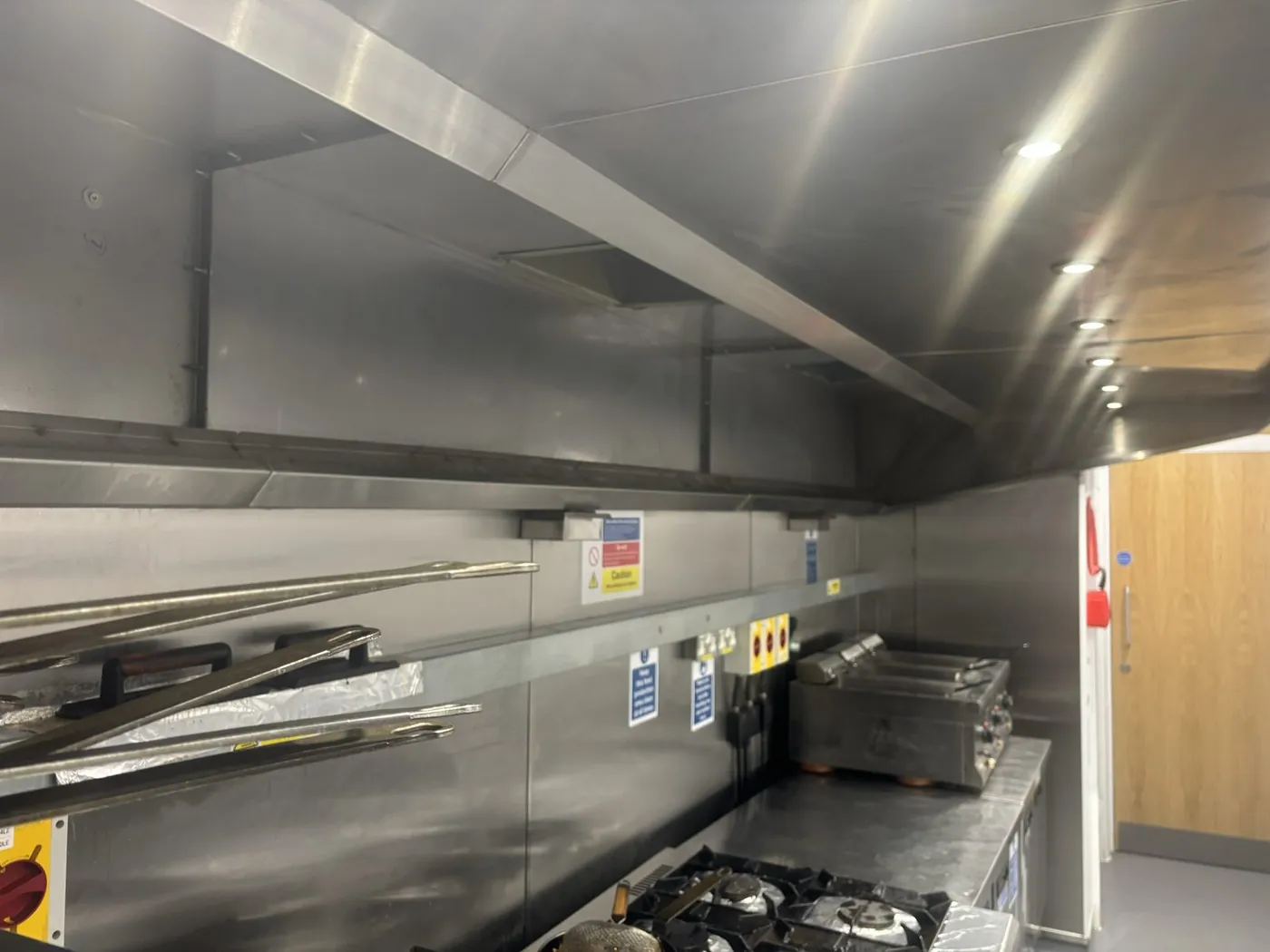
Restaurant kitchens sit squarely in the middle of the TR19 Grease usage bands, and which side they fall on depends on the menu. A neighbourhood bistro serving dinner five nights a week is moderate use and needs its extract cleaned every six months. A city-centre steakhouse with a chargrill running lunch and dinner seven days, a wok kitchen, or anywhere with a bank of fryers on from opening to close is heavy use and needs it every three. Very few restaurants qualify as light use, the twelve-month band. If yours has not had a full system clean in the last six months, it is probably overdue.
What restaurants get asked for
Four parties are likely to want your certificate. The landlord, particularly in a shopping centre or a managed food quarter, will often make a current TR19 certificate a condition of the lease and can inspect the ductwork where it runs through the building's common risers. A franchisor will check it during brand audits. The insurer will have written extract cleaning into the policy, and after a kitchen fire the loss adjuster's first request is the cleaning record; the insurance guide explains what happens when it is missing. The environmental health officer will ask about it during the hygiene inspection, and a greasy canopy in an open kitchen is visible from the dining room.
Menu, equipment and cleaning frequency
| Restaurant type | Typical cooking hours | TR19 band | Clean every |
|---|---|---|---|
| Chargrill, steakhouse, rotisserie | 10 to 14 | Heavy | 3 months |
| Wok, tandoor or charcoal cooking | 8 to 14 | Heavy | 3 months |
| Fryer-led casual dining, all-day trading | 10 to 12 | Heavy | 3 months |
| Dinner-only bistro or fine dining | 5 to 8 | Moderate | 6 months |
| Cafe restaurant, daytime only | 4 to 7 | Moderate or light | 6 to 12 months |
The contractor confirms the band from the grease readings rather than the menu alone, and the frequency guide covers the borderline cases.
Working around service
A restaurant cannot lose a Friday night to a duct clean, and it does not have to. The contractors we arrange work after last orders, through the night, or on the closed day, with the range cold and the pass sheeted off. An open kitchen needs a little more care because the dining room is exposed, and the contractor will protect front-of-house finishes as well as the cooking line. Long duct runs through upper floors or shared risers, which are common in converted city buildings, may need access arranged with the building manager; mention this when you enquire and the quote will allow for it. See ductwork cleaning for what is involved in a long run.
Chains, groups and franchises
An operator with several sites has a different problem: keeping every kitchen on its interval and every certificate in one place. We can arrange a contract schedule across the group, with a contractor for each region, fixed per-visit pricing and a consolidated evidence file that satisfies a brand audit as easily as an insurer. Franchisees who have to prove compliance to the franchisor find this removes a recurring headache.
What the clean includes and what it costs
A restaurant clean covers the canopy and plenum, the filters, the full duct run to the discharge, the fan and the outlet, with grease readings taken before and after. Our partner contractors hold BESA qualifications and CHAS accreditation, are fully insured, and issue the TR19 certificate and before-and-after photo report once the work is complete. Cost depends on the number of canopies, the length and accessibility of the ductwork and how long since the last clean; a medium restaurant with a duct run typically falls between £500 and £900, and the cost guide gives the wider picture. To arrange a clean for your restaurant, request a quote with your postcode and menu type.
Related services: Kitchen Extract Cleaning · Canopy Cleaning · Ductwork Cleaning · Extractor Fan Cleaning
Frequently asked questions
We have an open kitchen. Does that change how the clean is done?
The clean itself is the same, but the protection is more thorough. The contractor will sheet the pass, the counter and any front-of-house surfaces near the canopy, and will work when the dining room is empty. Open kitchens also tend to be inspected more visibly, since the canopy is on show to customers and EHOs alike, so many operators book an interim canopy clean between full visits.
Our landlord says the ductwork above the ceiling is our responsibility. Is that normal?
Yes, in most restaurant leases. The extract system usually forms part of the tenant's fit-out, and the repairing clause places its maintenance on the tenant even where the duct passes through the landlord's structure. You will still need the landlord's cooperation for access to risers and the roof, and the contractor can provide a specification for any access panels that need cutting.
How long will the restaurant be out of action?
Usually one night. A single canopy with a straightforward run is cleaned between close and the morning prep shift. A large kitchen with two or three canopies and a long vertical run may need two nights, or a closed day. The contractor will give a realistic estimate at the survey stage and will plan around your busiest services.
Can you arrange cleans for all our sites at once?
Yes. Give us the list of addresses, the cooking type at each and any existing certificates, and we will arrange a schedule across the group with a contractor per region and one consolidated record. Franchisees can use the same route for a single site, and the report will meet the franchisor's audit requirements.