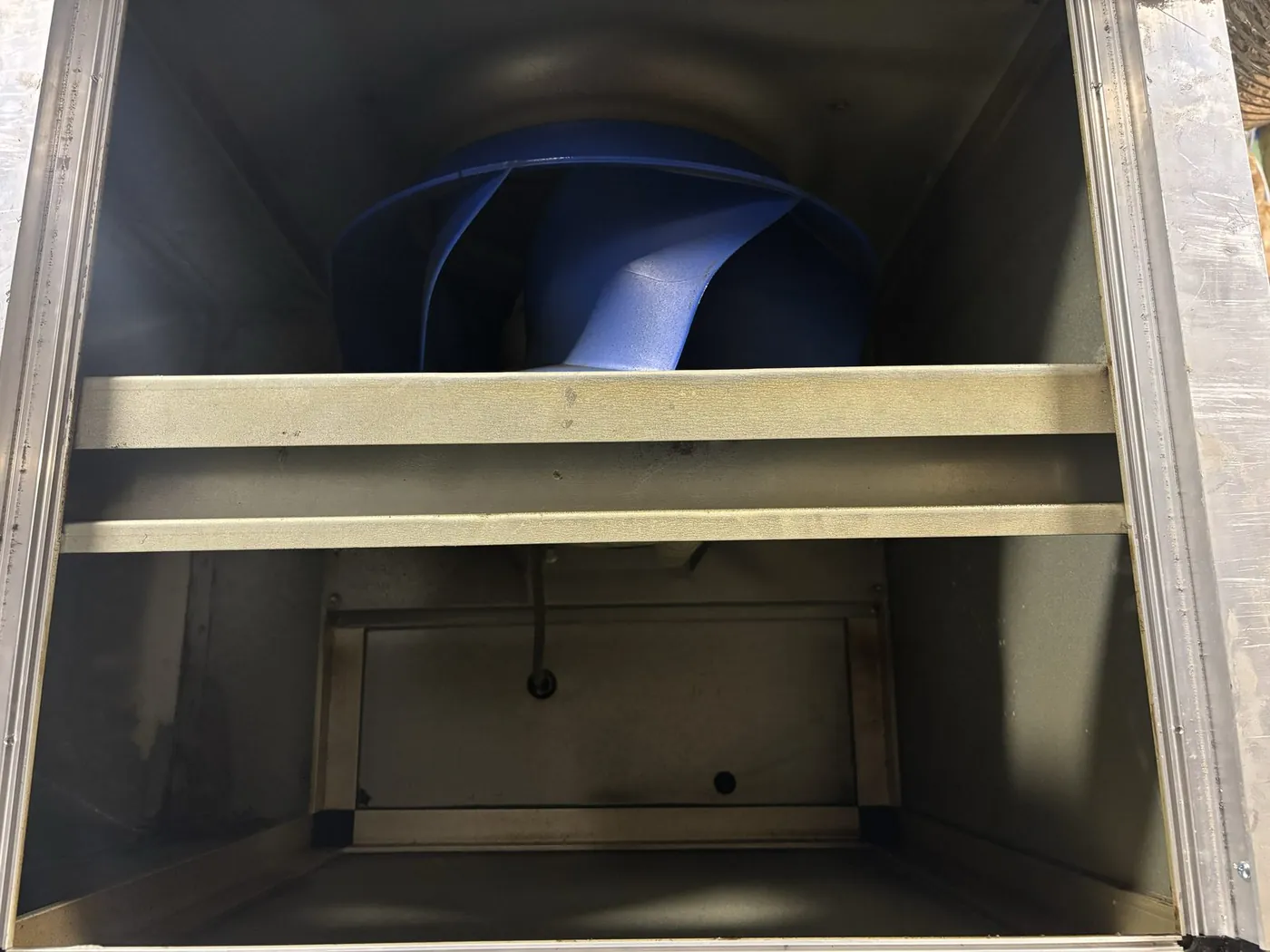
A holiday park is several food businesses on one site. The entertainment complex has a restaurant and a bar kitchen, there is a fish and chip takeaway by the shop, a cafe near the pool, a pizza counter for the evening, and sometimes an owners' club kitchen. From Easter to the October half-term they all run hard, and in the school summer holidays most of them cook for twelve hours or more a day, which is heavy use under TR19 Grease. From November to February many parks close altogether, so the cleaning plan has to follow the season rather than the calendar.
Timing the cleans around the season
- Pre-season clean. February or March, before the first bookings arrive. Every outlet is brought back to the acceptance level, fans are checked for seizure, bird nests and corrosion, and the certificates are dated from the start of trading.
- Peak-season visit. The busiest outlets, usually the takeaway and main restaurant, reach the three-month heavy-use interval by late June. A mid-season clean keeps them within the grease limit through August, when fire risk and the cost of a closure are both at their highest.
- End-of-season clean. Grease left in a duct over a five-month closure hardens, corrodes galvanised steel and attracts vermin, and a fan left coated all winter may not turn in spring. A clean before mothballing is cheaper than the one after.
Parks open all year should treat outlets trading through the winter as moderate use at six months, or light use at twelve for a cafe open a few hours a day, then step up to the heavy interval for summer. The frequency guide explains how to apply the bands to a seasonal pattern.
| Outlet | Season pattern | TR19 band in season | Suggested visits |
|---|---|---|---|
| Fish and chip takeaway | Lunch to late, Easter to October | Heavy | Pre-season, July, end of season |
| Main restaurant and bar kitchen | Breakfast to late in peak weeks | Heavy in summer, moderate in shoulder | Pre-season, mid-summer, end of season |
| Cafe or poolside snack bar | Daytime only | Moderate | Pre-season and end of season |
| Owners' club or function kitchen | Weekends and events | Light | Pre-season |
One schedule for the whole park
Because the outlets share a site, one contractor can clean all of them in one or two visits, far cheaper than treating each as a separate job. We arrange a contract schedule for the park with the pre-season, peak and end-of-season visits fixed in advance, a price per outlet agreed for the year, and one evidence file covering every kitchen. Park groups can extend the same schedule across the estate, with a contractor for each region and the certificates consolidated for head office.
Insurers, EHOs and the coastal problem
A fire in a park restaurant in August is a total loss of the season's trading, not just a repair bill, and business interruption insurers know it. Park policies routinely carry an extract-cleaning condition, and a loss adjuster will want to see that the interval was kept through the peak, not just that a clean happened in March; the insurance requirements guide covers the wording. Each outlet is a registered food business and the council's environmental health officers inspect them separately, usually in season. Coastal sites add a practical issue: roof fans and discharge cowls exposed to salt air corrode faster, and the contractor should note their condition in the report so the maintenance team can act before a fan fails in August.
What we arrange
For each outlet the contractor cleans the canopy and plenum, filters, duct run, fan and discharge, records the readings, and works on a closed day or overnight so no outlet loses a trading session. We match parks with contractors who cover rural and coastal areas and can handle several outlets per visit. The contractor assigned to a park is BESA-qualified, CHAS-accredited and fully insured, and issues a TR19 certificate with a before-and-after photo report for each outlet. Costs depend on the number of outlets, canopies and duct runs; the cost guide gives typical ranges per kitchen, and multi-outlet visits are usually priced more keenly. Request a park quote and tell us how many outlets you run and when your season starts.
Related services: Kitchen Extract Cleaning · Canopy Cleaning · Ductwork Cleaning · Extractor Fan Cleaning
Frequently asked questions
We close for the winter. Can we skip the end-of-season clean and do it in spring?
You can, but it usually costs more. Grease left over the winter hardens and is slower to remove, fans seize and cowls corrode, and a pre-season clean of a neglected system may find defects that delay opening. Cleaning before closure also means the certificate is in place if the insurer asks about the closed period. Most parks find one clean at each end of the season is the economical pattern.
Can all the outlets be done in one visit?
Usually over one or two nights, depending on how many canopies there are and how far apart the buildings sit. The contractor plans the sequence so that the outlets still trading in the shoulder season are cleaned on their closed day. Pre-season, when nothing is open, the whole park can be done in a single block.
Our takeaway is franchised to a separate operator. Who arranges its clean?
The franchise or concession agreement should say. Often the operator maintains the canopy and the park retains the building and the ductwork, but on a park it is simpler for everyone if the outlet is included in the park's schedule and the operator is recharged, so that one contractor cleans the whole site on the same dates. We can address the certificate to both.
How far in advance should we book the pre-season clean?
As early as possible, because every park in the region wants the same few weeks in February and March. Booking in the autumn, ideally as part of the end-of-season visit, secures the slot and lets the contractor plan the route around the coast. Parks that leave it to February often find the local contractors already full.